


Square AC2
Sold Out
Puzzle design by Vin&Co from Czech Republic, designer Vaclav Obsivac.
The goal is to put all the pieces inside the wooden tray. The puzzles is made from various wood (for example cherry, maple , walnut, ash, oak, acacia, elm, plum).
- Size: 7x7x2 cm
- Pieces: 10
- Difficulty: 5
- Wood: various wood
- Type: Packing
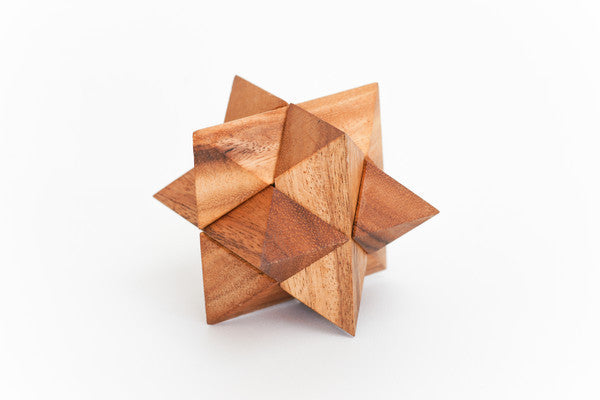
Star Puzzle
Sold Out
This is a good starting point for 3d puzzles, a fun puzzle that leaves you with a nice decoration for any desk or mantle. It is important to pay attention to how the star comes apart in order to put it back together again.
This puzzle contains 6 identical pieces. Try to assemble the pieces to a 3D star shape.
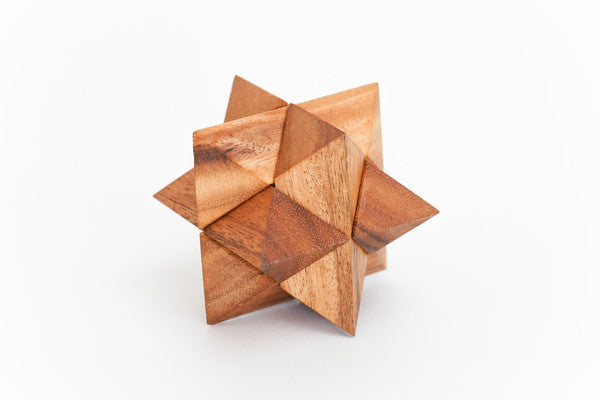
Star Puzzle - Mini
Sold Out
This is a good starting point for 3d puzzles, a fun puzzle that leaves you with a nice decoration for any desk or mantle. It is important to pay attention to how the star comes apart in order to put it back together again.
This puzzle contains 6 identical pieces. Try to assemble the pieces to a 3D star shape.

Teapico
Sold Out
Puzzle design by Vin&Co from Czech Republic., designer Vaclav Obsivac.
- Size: 70 mm
- Pieces: 18
- Difficulty: 5
- Wood: various wood
- Type: Packing
Goal:
Place all the pieces inside the box.
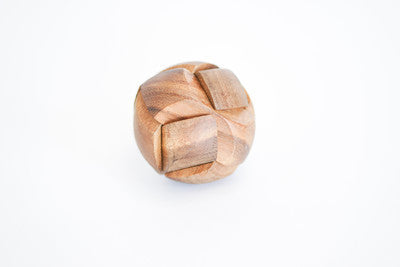
Tennis Ball - Interlocking Wooden Puzzle
Sold Out
Simple and elegant, arrange the 6 notched pieces so the smooth piece can lock it back together.
This puzzle contains 6 pieces. After you take the puzzle apart, try to assemble the pieces back together.
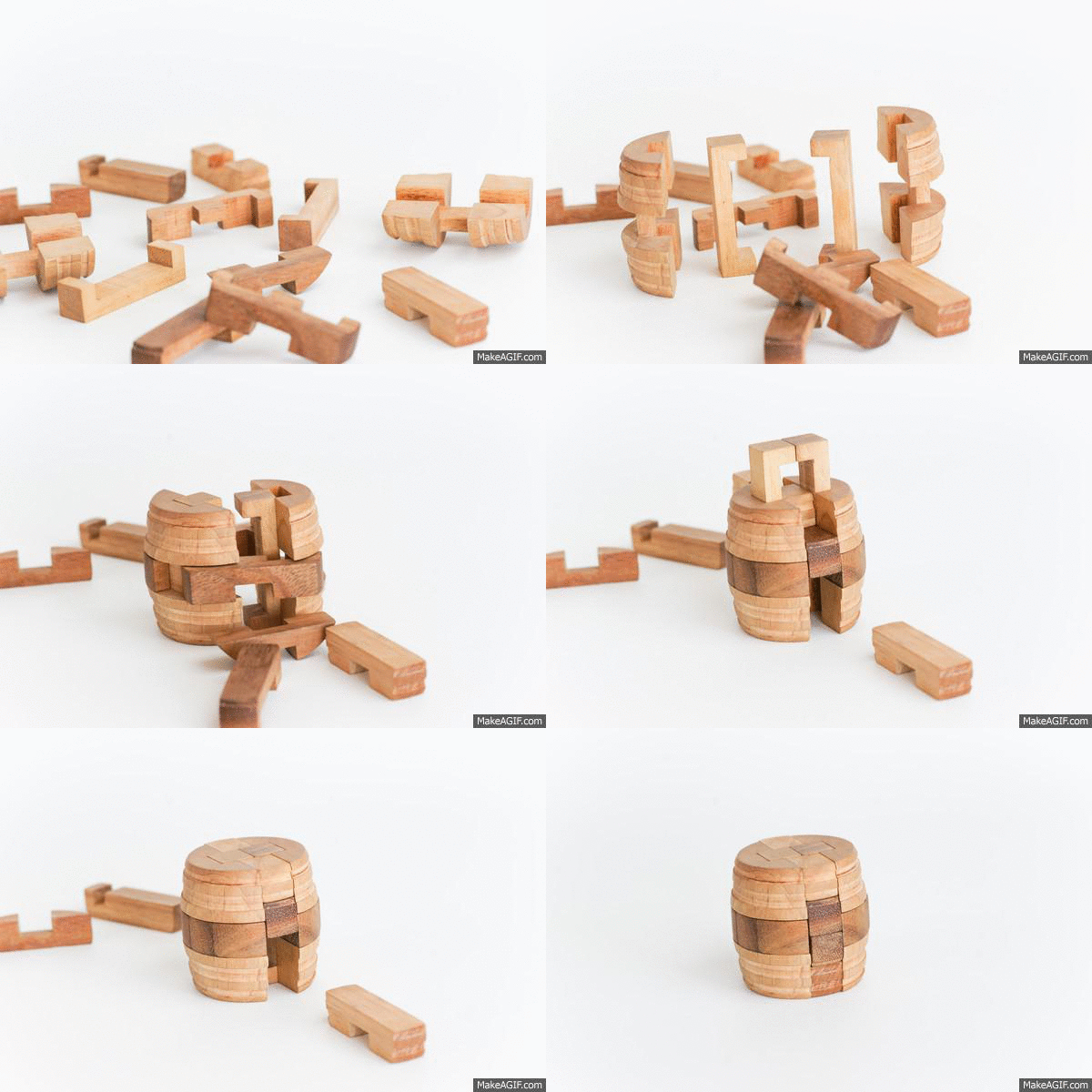
The (wine) Barrel - Interlocking Wooden Puzzle
Sold Out
This 12 piece puzzle has one key piece which is the first to go out and the last to go in. Once assembled no single piece can simply be pulled out of place but this key piece.
Twelve non-identical bars make up this interlocking puzzle.
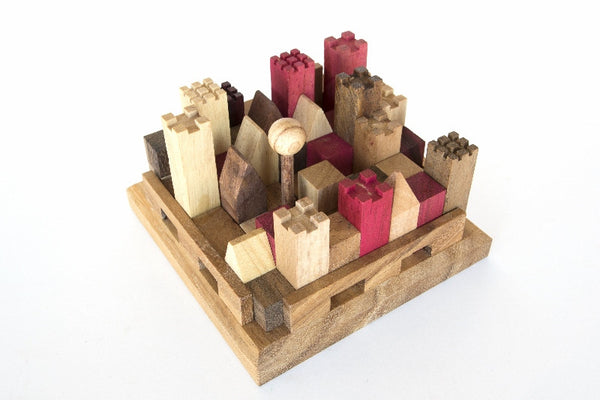
The Castle - Wooden Puzzle
Sold Out
|
This is a single player puzzle with difficulty level 1, 2, 3, 4, 5. To start the game – Take all the pieces out, put the castle guard ( the stick) in one of the holes. Now build the castle using all the pieces one next to the other. This puzzle has 13 options. Put the guard in a another hole and build the castle again. |
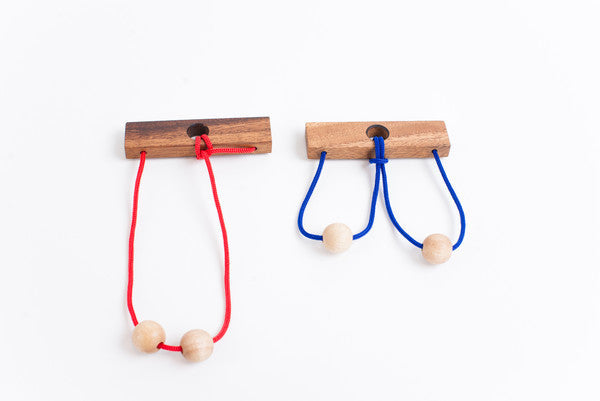
The Gordian Knot - String Puzzle
Sold Out
The legend of the Gordian knot is a metaphor for a puzzle solved by cheating or "thinking outside of the box."
Bring the puzzle from one ball on each loop to both balls on the same loop.
It may seem impossible but it can be done.
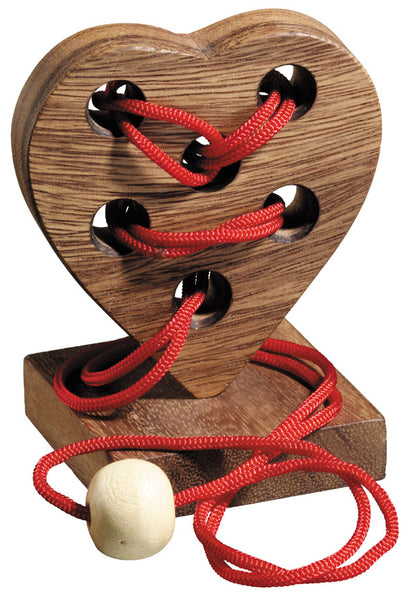
The Love Test - String Puzzle
Sold Out
As tricky and maddening as love itself! Try to remove the rope and ball off of the heart. If you fail, well, just try again. No scissors are allowed.
*String Color may change
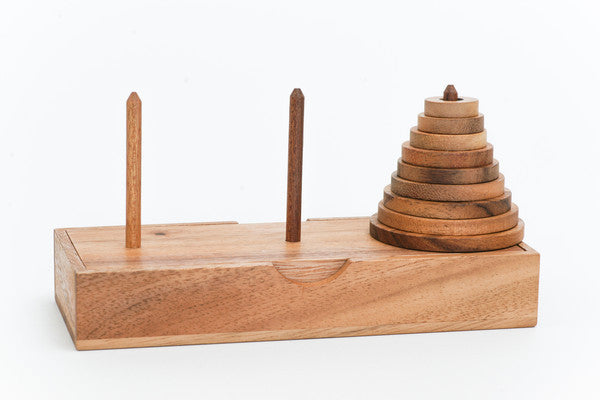
Towers of Hanoi - Wooden Puzzle
Sold Out
The tower of Hanoi (also called the tower of Brahma or the Lucas tower) was invented by a French mathematician Édouard Lucas in the 19th century. It is associated with a legend of a Hindu temple where the puzzle was supposedly used to increase the mental discipline of young priests. In the legend the young priests were given 64 gold disks stacked neatly on one of three posts. Each disk rested on a slightly larger disk. The priests' goal was to re-create the stack on a different post by moving disks, one at a time, to another post with the rule that a larger disk could never be placed on top of a smaller disk. Using mathematics, you can calculate that even when the priests found the most efficient way to solve the problem, and moved the disks at a rate of one per second, it would take almost 585 billion years to finish the job. That is more than 40 times the age of the universe!


